
Makineye ulaşım kısa süreliğine http://2.59.117.194:8888/ adresindedir. Makine test aşamasında olup OPENAI api key kullanımı sınırlıdır. Sadece son cümle devrik olabilir bunun sebebi ise OPENAI bizlere sunmus oldugu API Keyin kısıtlı olmasıdır.
Geri dönüşleriniz benim için değerledir. Yorumlarda bekliyorum
Önrek makale 560 kelime ingilizce en alt kısımda verilmiştir.
Blogları yayınlamak isterseniz bölüm soruları ile yayınlamanızı tavsiye ederim. iyi kullanmalar
Kullanım Detayları:




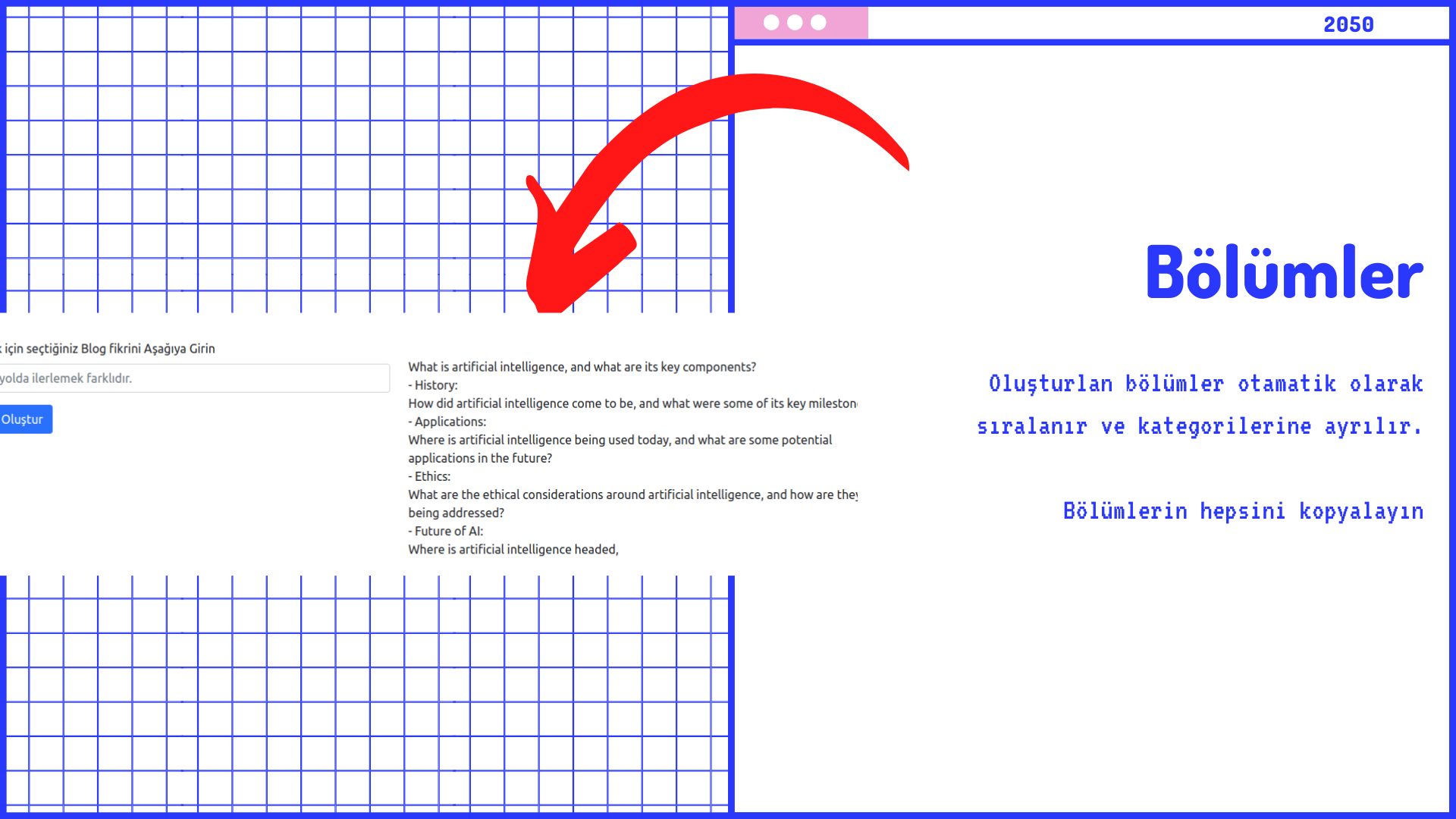
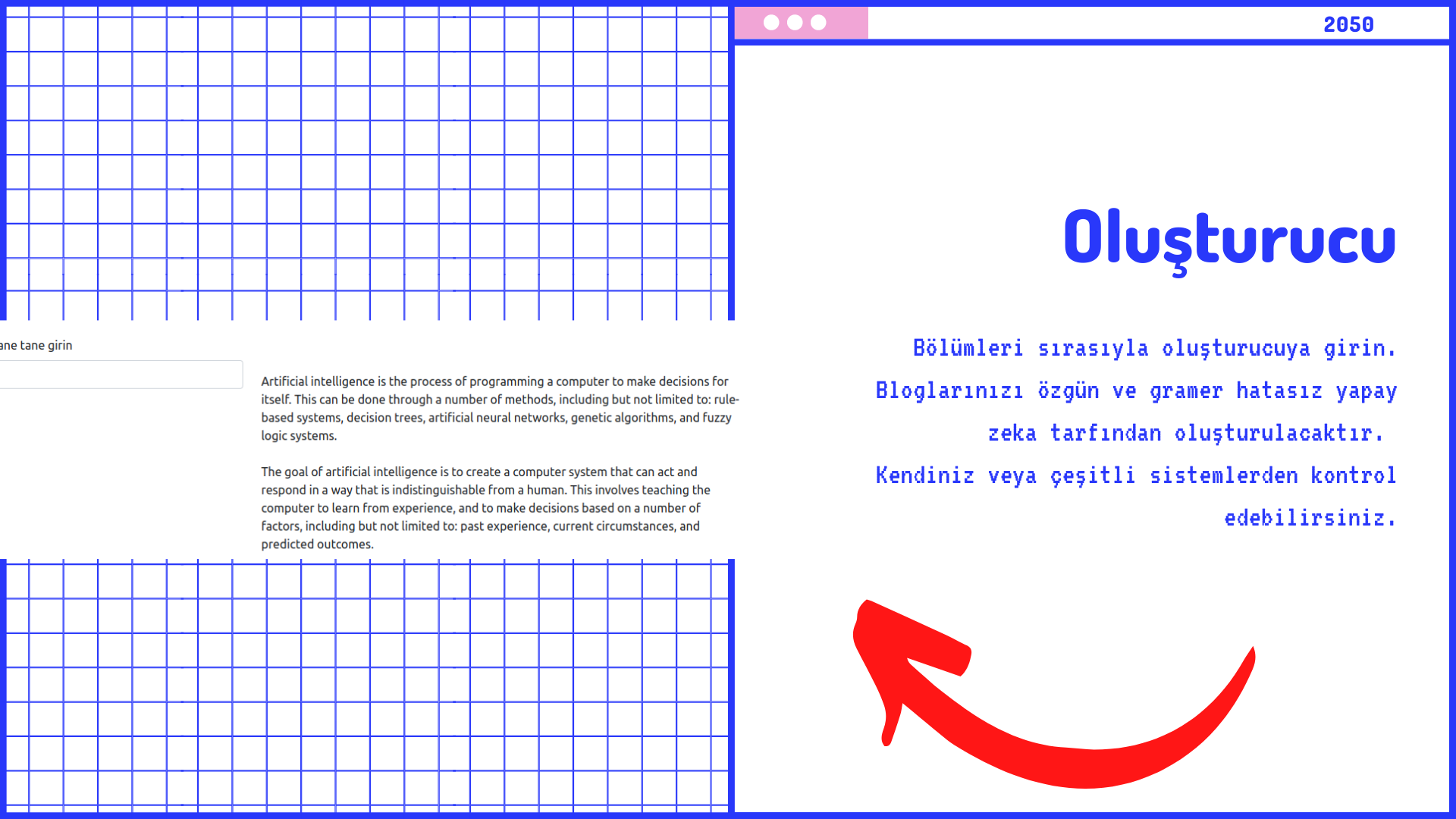
örnek makale:
Artificial intelligence is the process of programming a computer to make decisions for itself. This can be done through a number of methods, including but not limited to: rule-based systems, decision trees, artificial neural networks, genetic algorithms, and fuzzy logic systems.
The goal of artificial intelligence is to create a computer system that can act and respond in a way that is indistinguishable from a human. This involves teaching the computer to learn from experience, and to make decisions based on a number of factors, including but not limited to: past experience, current circumstances, and predicted outcomes.
Artificial intelligence (AI) has its roots in the mid-20th century, when researchers began to explore the possibility of machines that could reason, learn, and act autonomously. The first milestone was John McCarthys development of the AI programming language LISP in 1958. LISP enabled researchers to create machines that could learn from experience and solve problems. In the 1960s, AI research began to focus on creating machines that could understand natural language and communicate with humans. In 1969, Herbert Simon and Allen Newell developed the first AI program that could solve complex problems by reasoning logically.
In the 1980s, AI research focused on creating machines that could recognize patterns and images. In 1987, Geoffrey Hinton developed a neural network that could learn to recognize patterns by example. In the 1990s, AI research focused on creating machines that could learn on their own by analyzing data.
Artificial intelligence is used in a variety of ways today, from helping doctors diagnose diseases to helping businesses make financial decisions. Some potential applications of artificial intelligence in the future include helping drivers avoid accidents, teaching children in schools, and providing personalized customer service.
Artificial intelligence technology is rapidly evolving and growing more sophisticated every day. As businesses and individuals begin to adopt and utilize AI technologies, there are a number of ethical concerns that need to be considered.
One of the biggest ethical concerns around AI is the potential for it to be used to discriminate against people. For example, if a business were to use AI to analyze and score job applicants, it could inadvertently discriminate against certain groups of people, such as women or minorities.
Another concern is that AI could be used to manipulate or deceive people. For example, if a company were to use AI to create a virtual assistant, that assistant could be programmed to deceive the user into thinking it was human. This could potentially lead to some people becoming overly reliant on AI technologies and not being able to function without them.
AI technologies also raise privacy concerns.
where is artificial intelligence headed?
There is no one answer to this question, as artificial intelligence (AI) is a rapidly-evolving field with many potential applications. However, some key areas that AI is currently being developed for include:
-Autonomous vehicles: AI is being used to create cars that can drive themselves, which could eventually lead to a future where you can hail a driverless car from your smartphone.
-Healthcare: AI can be used to improve diagnosis and treatment of diseases, as well as to help doctors keep track of patient data.
-Finance: AI can be used to analyze huge amounts of financial data to help make better investment decisions.
-Marketing: AI can be used to create targeted marketing campaigns based on analyzing data about customers likes and interests.
-Law: AI can be used to help lawyers research cases and to automate certain legal tasks.
-Education: AI can be used to create personalized learning plans for students.


