• 09-10-2026, 19:13:08
    #1


    Selamlar dostlar,
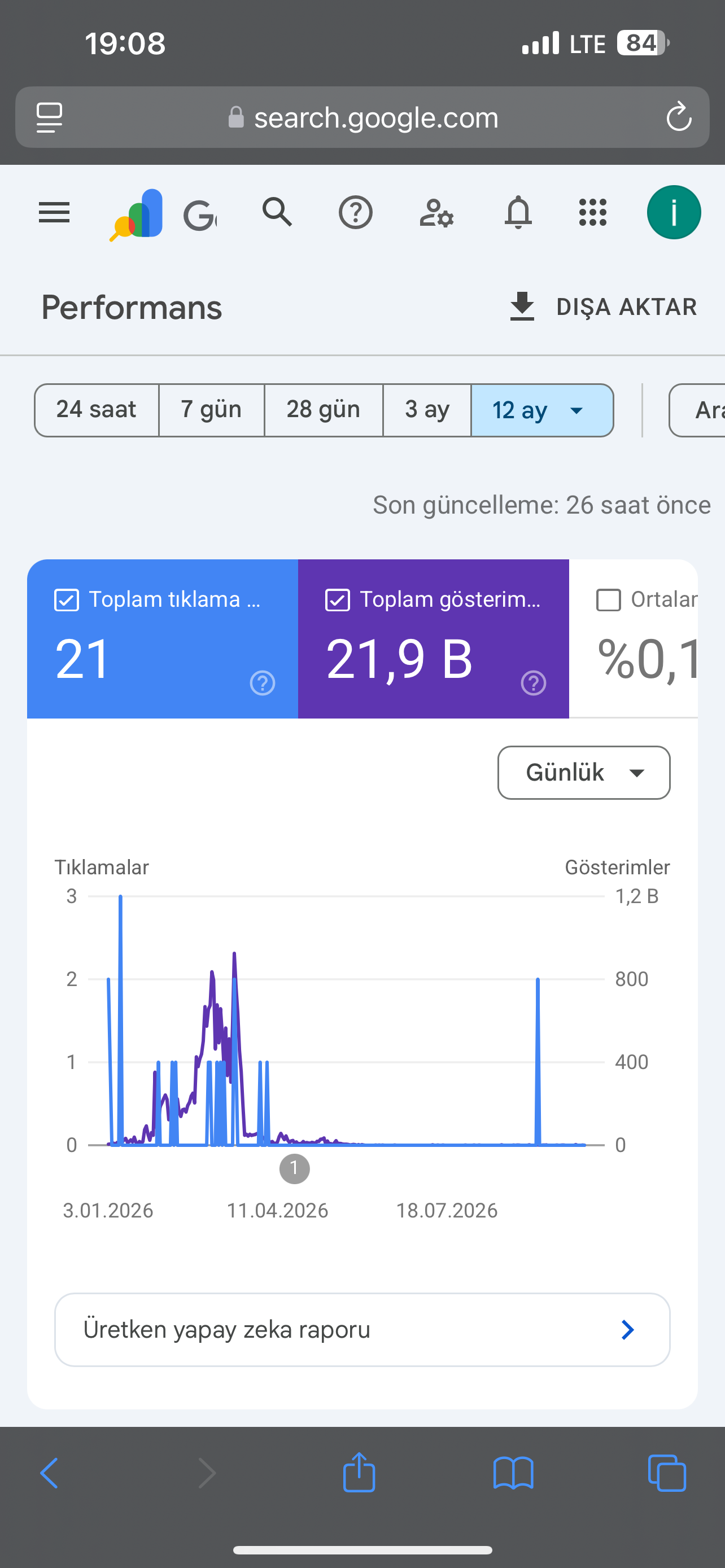
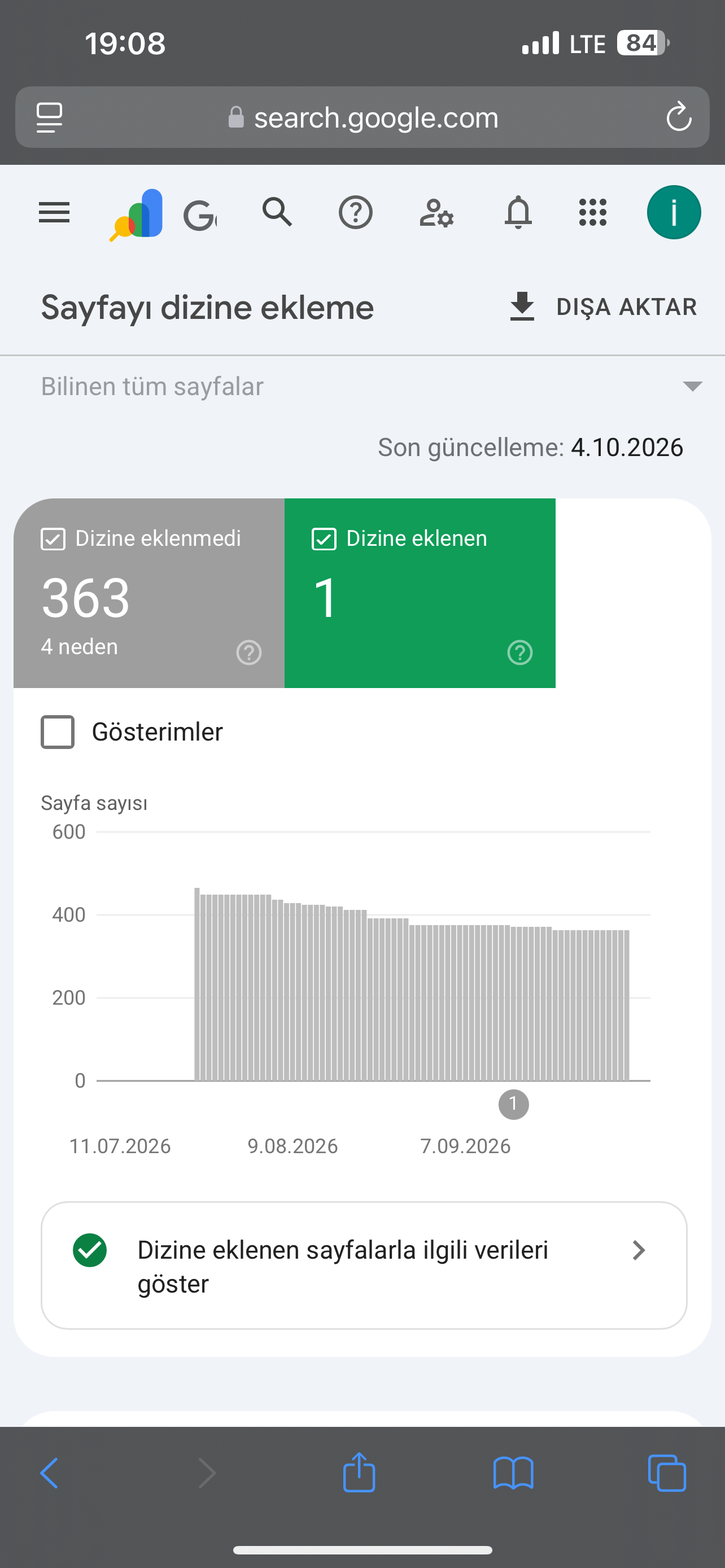
    İngilizce olarak yayın yaptığım sitemde son dönemde gösterimler ve index sayıları adeta dibi gördü. Muhtemelen standart LLM (ChatGPT vb.) çıktısıyla toplu içerik ürettiğim için (günde 1-2 ve toplam 280 makale) Google’ın kalite algoritmalarına ve filtrelerine takıldım.
    Durumu fark edince radikal bir kararla sitedeki tüm içerikleri sıfırlayıp sildim. Şu an siteyi tamamen temiz bir sayfayla başlattım ve alternatif olarak Semrush AI Article Generator ile birkaç adet daha özenli makale ekledim.
    Sizlere birkaç sorum ve danışmak istediğim nokta var:
    Bu hamle (eski içerikleri silip yenileriyle yola devam etmek) süreci toparlamak için yeterli mi, yoksa Google gözündeki "sandbox / ceza" etkisinin kırılması için ekstra bir şeyler yapmam gerekiyor mu?
    Trafiği ve indexleri yeniden canlandırmak adına bu aşamadan sonra tam olarak nasıl bir strateji izlemeliyim?
    Gerçekten tecrübeli ve samimi şekilde fikir vermek, yol göstermek isteyen arkadaşlar olursa site adresini PM (özel mesaj) ile iletebilirim. İnceleyip yorum yapacak herkese şimdiden çok teşekkürler, bol kazançlar.
  • 09-10-2026, 19:20:40
    #2
    Hocam sitede çok makale olmasindan ziyade kaliteli
    20 30 makale olması çok iiyidir
    Promt ile makale oluşturup elle düzeltme yapmak ve kaliteli içerik oluşturmak şart
    Yanliz kopya içerikten çok
    Ai kaliplari ve ai cumlelerini araştirin bunlar olmasin uretilen yazilarda

    Ek olarak sordugun soruya gelince bişey olmaz hocam yanliz sildigin içerikleri googledende kaldir ve yeni içerikleri hızlı indexlet
  • 09-10-2026, 19:24:03
    #3
    iyisite.NET
    Selam hocam, durumu net anlatmışsın. Silmek doğru hamleydi ama tek başına “eski günlere döndük” demek yetmez.
    Google’da bunun adı çoğu zaman klasik sandbox değil. Özellikle toplu üretilmiş, birbirine benzeyen, gerçek bir deneyim katmayan içerikte sistem bunu scaled content / kalite sorunu gibi okuyor. 280 yazıyı silince o sayfalar gider, evet. Ama domain hâlâ aynı. Crawl geçmişi, daha önce indexlenmiş URL’ler, o dönemki kalite sinyali bir anda sıfırlanmıyor. Yani ceza kalksın diye ekstra bir ritüel yok; manuel işlem yoksa reconsideration da yok. GSC’de Manual actions boşsa bu algoritmik tarafta kalıyor ve orada “sildim, tamam” demek yetmiyor. Google’ın görmesi gereken şey, bu domainin artık o üretim modelinden çıktığı.
    Semrush generator ile “biraz daha özenli” yazı eklemek de beni rahatlatmaz. Araç değişince içerik otomatik insan olmuyor. Hâlâ şablon, hâlâ genel bilgi, hâlâ “bu konuyu kimse böyle yazmamış” diyemeyeceğin bir metinse, Google için farkı az. Günde 1-2 bile olsa aynı mantıkla devam edersen eski desenin yumuşak versiyonunu kurmuş olursun.
    Bu aşamada ben şöyle giderdim:
    Önce GSC’yi soğukkanlı aç. Manuel işlem, güvenlik, sayfa deneyimi, crawl anomaly var mı bak. Silinen URL’ler 404’te salınmasın; kalıcı gittiyse 410 daha temiz. Sitemap’te ölü adres kalmasın. Eski yazıları başka yere 301’leme, konu gerçekten devam edecek ve yeni sayfa ciddi şekilde daha iyiyse başka. Yoksa 301 ile eski sinyali yeni sayfaya taşırsın.
    Sonra yayın ritmini kır. Bir süre “günde yazı” hedefi olmasın. Önce Haftada bir iki tane. İngilizce nişte rakip zaten dolu; genel rehber, “what is”, “best X” listesi, tool çıktısıyla doldurulmuş H2’ler işine yaramaz. İşe yarayan şey daha dar: kendi testin, ekran görüntüsü, sayı, karşılaştırma, hatalı yaygın bilgiyi düzeltmen, nişin içinde gerçekten bildiğin bir köşe. Yazar sayfası, hakkında, iletişim de boş şablon olmasın. İngilizce sitede “AI wrote this” kokusu, hakkında sayfasındaki boşluktan da çıkar.
    Index için request indexing’e yüklenme. Birkaç sağlam sayfayı ekle, gerisini bırak. Her yeni URL’yi elle istedin diye daha hızlı güven gelmez, bazen tersi olur. Impression ve index’in toparlanması hafta işi değil; içerik gerçekten değiştiyse bile birkaç ay sürer, bazen bir core update’e kadar belirginleşmez. Bu sürede trafiği “hemen” aramak için para sayfası, thin affiliate ya da yine AI ile konu çoğaltmak en sık yapılan hata.
    Backlink tarafını da acele etme. Profil hâlâ zayıfken toplu dizin, guest post paketi, “indexing hizmeti” almak domaini bir kez daha kirletir. Önce markanın geçtiği gerçek bahsetmeler, nişte iki üç tane doğal link, insanların site adını araması daha değerli. O da içerik hak ediyorsa gelir.
  • 09-10-2026, 19:28:55
    #4
    Ai iceriklerin hazin sonu bu hocam
  • 09-10-2026, 19:33:09
    #5
    LisansHizmetleriNET adlı üyeden alıntı: mesajı görüntüle
    Ai iceriklerin hazin sonu bu hocam
    Anlamadığım türkçede millet nasıl tıkır tıkır yapıyor @Shentaweb; hocamın konusunu gördüm mesela. Temalarını da kullanıyorum. İşlerinde de iyiler. Gpt 5.6 ile türkçe içerik oluşturuyorlar ve gayet güzel gösterim alıyor. Belki o da bir yorumda bulunur diye etiketliyorum
  • 09-10-2026, 19:35:24
    #6
    WordPress
    Monster adlı üyeden alıntı: mesajı görüntüle
    Anlamadığım türkçede millet nasıl tıkır tıkır yapıyor @Shentaweb; hocamın konusunu gördüm mesela. Temalarını da kullanıyorum. İşlerinde de iyiler. Gpt 5.6 ile türkçe içerik oluşturuyorlar ve gayet güzel gösterim alıyor. Belki o da bir yorumda bulunur diye etiketliyorum

    https://ai.shentaweb.com/ gpt 5.6 luna ile üretilen bir site geçen aylarda günde 10k gösterime kadar ulaştı. Devrettiğimiz için takip edemedik fakat sonuçlar yeni projelerde de mükemmel.

    Uyanmak lazım. Yapay zeka artık hayatımızın bir parçası. Düzenli bir inşa ile harika sonuçlar alınması kaçınılmaz.
  • 09-10-2026, 19:40:38
    #7
    Kurumsal Üye
    Google AI içeriğe karşı olmadığını, ''kalitesiz ve kullanıcılara fayda sağlamayan arama odaklı toplu içeriğe'' karşı olduğunu açıkça belirtiyor.
    AI'ı sadece taslak çıkarmak veya beyin fırtınası yapmak için kullanın.

    Silme hamlesi doğru bir ilk adımdı ancak 410 yanıt kodları ile silinen URL'lerin Google'a bildirilmesi şarttır.

    Günde 1 içerik yerine haftada 1 veya 2 adet son derece kaliteli, uzun soluklu içerik yayınlayın.

    Metinleri kendiniz yazın, dili tamamen insanileştirin, sektörde bilinen yanlışları düzelten veya uygulamalı rehber niteliğinde yazılar hazırlayın.
    Sitede Güven Unsurlarını (E-E-A-T) Güçlendirin.

    Sitenin kendi doğal tarama hızına bırakın.
    Kaliteli içerikler yayınlandıkça ve site haritası güncel tutuldukça Google tarama sıklığını zaten kendiliğinden artıracaktır.

    Acele etmek yerine sakince hareket edilmelidir aslında.
  • 09-10-2026, 21:57:52
    #8
    Hocam tüm içerikleri silmek tek başına çözüm olmayabilir; bence önce Search Console verilerini inceleyip özgün, faydalı içeriklerle yavaş yavaş ilerlemek daha mantıklı.
  • 10-10-2026, 08:18:28
    #9
    Tüm postlarını verdiğim prompt ile tarat düzeltmesi gerekeni düzelt sonra tekrar istek gönder gsc 'ye


    WORDPRESS SEO / CONTENT / TEMPLATE / E-E-A-T QA-QC
    MASTER DISCOVERY AUDIT

    SITE:
    [DOMAIN BURAYA]

    MODE:
    READ-ONLY DISCOVERY ONLY

    NO LIVE WORDPRESS WRITES
    NO CONTENT EDITS
    NO TAXONOMY CHANGES
    NO STATUS CHANGES
    NO SCHEDULE CHANGES
    NO REDIRECT WRITES
    NO CANONICAL CHANGES
    NO SEO META CHANGES
    NO PLUGIN INSTALL
    NO EXECUTE
    NO DELETE

    ==================================================
    0. CORE OBJECTIVE
    ==================================================

    Perform a complete current-state QA/QC audit of this WordPress site before any production changes.

    Evaluate:

    1. Inventory integrity
    2. Duplicate content
    3. Search-intent cannibalization
    4. Internal linking
    5. Taxonomy
    6. Content structure
    7. Programmatic/template repetition
    8. SEO metadata
    9. E-E-A-T / trust
    10. Sources and factual claims
    11. Schedule/status anomalies
    12. Technical indexability
    13. Safe production opportunities

    Do not assume any previous inventory, classification, report, ID list, content count, or SEO decision is still correct.

    Build the current state from scratch.

    IMPORTANT:

    A recommendation is NOT permission to make a change.

    This entire task is discovery/read-only.

    ==================================================
    1. INVENTORY LOCK
    ==================================================

    Take the freshest available WordPress snapshot.

    Prefer where available:

    - current WordPress admin/REST data
    - fresh All Content WXR export
    - current frontend validation

    Record:

    - snapshot/export UTC timestamp
    - SHA-256 if a file is used
    - publish posts
    - future/scheduled posts
    - draft posts
    - pending posts
    - private posts
    - pages
    - attachments/media
    - categories
    - tags

    Separate clearly:

    POSTS
    PAGES
    MEDIA
    TAXONOMY

    Do not mix attachment/page counts into post counts.

    Check for discrepancies between:

    - WordPress admin counts
    - REST counts
    - WXR counts

    If counts disagree:

    INVENTORY_MISMATCH

    and explain the difference before proposing production work.

    ==================================================
    2. COMPLETE POST INVENTORY
    ==================================================

    For every post collect where available:

    - post ID
    - status
    - title
    - slug
    - permalink
    - post_date
    - post_date_gmt
    - modified date
    - modified_gmt
    - category IDs/names
    - tag IDs/names
    - author
    - raw content SHA-256
    - excerpt
    - featured image ID

    Also collect SEO data where available:

    - SEO title
    - meta description
    - focus keyword
    - canonical
    - robots/indexability
    - schema type
    - redirect metadata if any

    If Rank Math is installed, inspect Rank Math fields.

    Do NOT automatically populate missing SEO fields.

    ==================================================
    3. EXACT DUPLICATE QA
    ==================================================

    Find:

    - exact duplicate titles
    - exact duplicate slugs
    - exact duplicate focus keywords
    - exact duplicate SEO titles
    - exact duplicate meta descriptions
    - exact duplicate body content
    - near-identical body content

    Separate:

    EXACT_DUPLICATE
    LIKELY_DUPLICATE
    NO_DUPLICATE
    REVIEW_REQUIRED

    For every duplicate/near-duplicate group report:

    - IDs
    - URLs
    - titles
    - status
    - similarity reason
    - whether search intent is also duplicated

    Do NOT merge, draft, redirect, canonicalize, or delete anything.

    ==================================================
    4. SEARCH-INTENT CANNIBALIZATION QA
    ==================================================

    Detect posts targeting substantially the same search intent.

    Do NOT call posts cannibalized merely because they share:

    - one keyword
    - one category
    - one tag
    - similar wording
    - the same template

    For every suspected pair/group report:

    - post IDs
    - URLs
    - titles
    - focus keywords
    - status
    - overlapping search intent
    - unique intent differences
    - unique useful content
    - internal-link dependencies
    - current canonical/indexability
    - likely primary candidate
    - likely secondary candidate

    Classify:

    CANNIBAL_HIGH_CONFIDENCE
    POSSIBLE_CANNIBAL
    DISTINCT_INTENT
    REVIEW_REQUIRED

    Also distinguish:

    SAME_TEMPLATE_SAME_INTENT
    SAME_TEMPLATE_DIFFERENT_INTENT
    DIFFERENT_TEMPLATE_SAME_INTENT

    Do not perform:

    - merge
    - draft
    - redirect
    - status change
    - canonical change

    ==================================================
    5. INTERNAL LINK QA
    ==================================================

    Analyze editorial internal links in post/page bodies.

    For every link where practical collect:

    - source ID
    - source status
    - source URL
    - anchor text
    - destination URL
    - destination post ID
    - destination status
    - HTTP result
    - redirect result

    Detect:

    - broken internal links
    - links to deleted content
    - links to draft/private posts
    - links to redirected URLs
    - redirect chains
    - links to cannibal secondary URLs
    - links to non-indexable pages
    - excessive repeated exact-match anchors
    - contextually misleading anchor text
    - orphan posts
    - zero-editorial-link posts

    Separate:

    MANUAL_BODY_LINK
    THEME_GENERATED_LINK
    ARCHIVE/CARD_LINK
    NAVIGATION_LINK

    Do not treat automatic theme cards/archive links as manually authored body links.

    For suspected orphan posts, clearly state the scope of the check.

    Do not claim a page has no links anywhere on the internet.

    Do NOT rewrite links.

    ==================================================
    6. TAXONOMY QA
    ==================================================

    Inspect:

    - categories
    - tags
    - category/tag slug overlap
    - category/tag semantic duplication
    - empty terms
    - unused terms
    - single-use tags
    - low-value tag archives
    - over-fragmented taxonomy
    - duplicate archive intent
    - categories functioning as tags
    - tags functioning as categories

    For every issue classify:

    SAFE_TAXONOMY_CLEANUP
    REVIEW_TAXONOMY
    KEEP
    DELETE_CANDIDATE

    IMPORTANT:

    DELETE_CANDIDATE is NOT permission to delete.

    For category/tag overlap check whether removal would:

    - make a taxonomy archive empty
    - reduce useful navigation
    - affect internal links
    - affect current indexable archives

    Do NOT alter taxonomy.

    ==================================================
    7. CONTENT STRUCTURE QA
    ==================================================

    Inspect posts for:

    - missing/abnormal H1 usage
    - duplicate H2
    - duplicate H3
    - generic repeated headings
    - malformed heading hierarchy
    - empty sections
    - duplicate paragraphs
    - repeated FAQ questions
    - repeated FAQ answers
    - placeholder content
    - obviously unfinished content
    - malformed HTML
    - broken Gutenberg structures
    - excessive boilerplate
    - generic conclusions
    - generic introductions
    - structurally repetitive sections

    Classify:

    SAFE_HEADING_FIX
    SAFE_STRUCTURE_FIX
    REVIEW_CONTENT
    NO_ACTION

    A fix is SAFE only if deterministic.

    Examples of potentially SAFE fixes:

    - exact duplicated heading
    - exact duplicated paragraph
    - obvious template placeholder
    - heading clearly unrelated to its own section

    Editorial rewriting is not automatically SAFE.

    ==================================================
    8. SITE-WIDE TEMPLATE / PROGRAMMATIC CONTENT QA
    ==================================================

    Analyze whether posts are generated from repeated or programmatic templates.

    The objective is NOT to penalize a consistent editorial format.

    The objective is to detect mechanical repetition that makes pages substantially interchangeable.

    For every major content cluster inspect:

    - introduction structure
    - first paragraph wording
    - H2 sequence
    - H3 sequence
    - heading wording
    - paragraph ordering
    - conclusion structure
    - FAQ structure
    - related-guides section
    - CTA blocks
    - image placement
    - image count/order
    - internal-link placement
    - anchor-text patterns
    - transition sentences
    - examples
    - descriptive phrases
    - HTML/Gutenberg block sequences

    ==================================================
    8.1 TEMPLATE SIMILARITY
    ==================================================

    Compare posts within the same cluster.

    Measure where practical:

    - identical heading sequence
    - identical paragraph count
    - exact repeated sentences
    - near-duplicate paragraphs
    - repeated intro wording
    - repeated outro wording
    - repeated FAQs
    - repeated related-guide blocks
    - repeated CTA language
    - identical internal-link sections
    - identical block structure

    When evaluating textual similarity, account for expected variable substitutions such as:

    - city name
    - state
    - room name
    - product name
    - style keyword
    - dimensions
    - other legitimate variable tokens

    Do not classify a page as duplicate merely because these variables differ.

    ==================================================
    8.2 SITE LAYOUT VS CONTENT TEMPLATE
    ==================================================

    Distinguish:

    SITE_LAYOUT_TEMPLATE

    from:

    CONTENT_TEMPLATE

    Shared theme/layout elements are not themselves a content-quality problem.

    ==================================================
    8.3 TEMPLATE CLASSIFICATION
    ==================================================

    Classify every cluster/post as:

    TEMPLATE_HEALTHY
    TEMPLATE_MINOR_REPETITION
    TEMPLATE_REVISE_STRUCTURE
    TEMPLATE_HIGH_SIMILARITY
    TEMPLATE_NEAR_DUPLICATE
    REVIEW_REQUIRED

    Definitions:

    TEMPLATE_HEALTHY
    - consistent structure
    - substantially unique content
    - unique examples/details
    - headings genuinely adapted to topic

    TEMPLATE_MINOR_REPETITION
    - some reusable phrasing
    - content remains materially distinct

    TEMPLATE_REVISE_STRUCTURE
    - content is useful
    - structure is excessively mechanical

    TEMPLATE_HIGH_SIMILARITY
    - substantial section/wording repetition

    TEMPLATE_NEAR_DUPLICATE
    - page differs mainly through variable substitution or superficial rewriting

    ==================================================
    8.4 TEMPLATE CLUSTER REPORT
    ==================================================

    For each significant template cluster report:

    - cluster/topic
    - number of posts
    - example post IDs
    - example URLs
    - common heading pattern
    - repeated paragraphs/examples
    - repeated FAQ structure
    - similarity severity
    - exact elements causing concern

    State whether recommended future action is:

    NO_ACTION
    HEADING_ONLY
    STRUCTURE_REVISION
    BODY_EDITORIAL_REWRITE
    DUPLICATE/CANNIBAL_REVIEW

    Do NOT rewrite templates during discovery.

    ==================================================
    9. SEO META / RANK MATH QA
    ==================================================

    Check:

    - missing SEO title
    - duplicate SEO title
    - missing meta description
    - duplicate meta description
    - missing focus keyword
    - duplicate focus keyword
    - unexpected custom canonical
    - incorrect canonical
    - unexpected noindex
    - robots anomalies
    - redirect metadata
    - schema anomalies where obvious

    Do NOT assume that every:

    - missing focus keyword
    - missing meta description
    - missing custom SEO title

    must be fixed.

    Classify:

    SAFE_META_FIX
    REVIEW_META
    NO_ACTION

    Rank Math fields should not be changed merely to obtain a plugin score.

    ==================================================
    10. E-E-A-T / TRUST QA
    ==================================================

    Evaluate the site and major content clusters for:

    Experience
    Expertise
    Authoritativeness
    Trust

    IMPORTANT:

    Do not treat E-E-A-T as a single numeric ranking factor.

    Use it as a quality and trust QA framework.

    Do NOT invent:

    - credentials
    - professional experience
    - tests
    - certifications
    - authorship
    - first-hand experience
    - sources
    - company history

    ==================================================
    10.1 EXPERIENCE
    ==================================================

    Look for topic-appropriate evidence of experience:

    - first-hand observations
    - practical examples
    - real scenarios
    - original photos/screenshots where relevant
    - measurements
    - actual tests
    - process descriptions
    - lessons learned
    - specific reasoning
    - practical limitations/tradeoffs
    - topic-specific details

    Flag content that is:

    - generic
    - interchangeable
    - purely theoretical where experience would matter
    - mechanically generated
    - unsupported first-person experience

    Classify:

    EXPERIENCE_STRONG
    EXPERIENCE_ADEQUATE
    EXPERIENCE_WEAK
    EXPERIENCE_NOT_EXPECTED
    REVIEW_REQUIRED

    ==================================================
    10.2 EXPERTISE
    ==================================================

    Evaluate:

    - terminology
    - factual precision
    - technical accuracy where verifiable
    - reasoning depth
    - standards/references where relevant
    - specialist claims
    - calculations where applicable
    - unsupported absolute claims

    Classify:

    EXPERTISE_STRONG
    EXPERTISE_ADEQUATE
    EXPERTISE_WEAK
    UNSUPPORTED_EXPERT_CLAIM
    REVIEW_REQUIRED

    ==================================================
    10.3 AUTHORSHIP
    ==================================================

    Inspect:

    - named author
    - author page
    - author bio
    - author expertise
    - reviewer information
    - editorial responsibility
    - consistency of author attribution

    Flag:

    MISSING_AUTHOR
    WEAK_AUTHOR_BIO
    IRRELEVANT_CREDENTIAL
    AUTHORSHIP_INCONSISTENCY
    PASS

    Do not invent credentials.

    ==================================================
    10.4 AUTHORITATIVENESS
    ==================================================

    Evaluate:

    - topical depth
    - consistent subject coverage
    - original research/data
    - primary-source references
    - credible external sources
    - internal topical organization
    - relevant author/reviewer expertise

    Do NOT infer authority only from:

    - number of posts
    - domain age
    - keyword rankings

    Classify:

    AUTHORITY_STRONG
    AUTHORITY_ADEQUATE
    AUTHORITY_WEAK
    REVIEW_REQUIRED

    ==================================================
    10.5 TRUST
    ==================================================

    Inspect site-wide trust signals:

    - About page
    - Contact page
    - author information
    - ownership/business information
    - editorial policy
    - correction policy
    - privacy policy
    - terms
    - affiliate disclosure
    - advertising disclosure
    - review methodology
    - publication/update dates
    - sourcing
    - HTTPS
    - misleading promises
    - unverifiable statistics
    - fabricated expertise
    - fake-looking testimonials
    - exaggerated claims

    Classify:

    TRUST_STRONG
    TRUST_ADEQUATE
    TRUST_WEAK
    TRUST_CRITICAL

    ==================================================
    11. SOURCE / CITATION QA
    ==================================================

    For factual claims that reasonably require evidence, inspect whether sources are:

    - present
    - relevant
    - authoritative
    - primary where practical
    - current enough
    - actually supportive of the claim

    Classify:

    SOURCE_STRONG
    SOURCE_MISSING
    SOURCE_WEAK
    SOURCE_OUTDATED
    SOURCE_NOT_SUPPORTING_CLAIM
    REVIEW_REQUIRED

    Do not require citations for ordinary subjective/editorial statements.

    Do not infer that a source supports a claim merely because a link is present.

    ==================================================
    12. CLAIM QA
    ==================================================

    Detect potentially risky claims such as:

    - best
    - proven
    - guaranteed
    - 100%
    - always
    - never
    - safe
    - certified
    - approved
    - scientifically proven
    - recommended by experts
    - clinically proven
    - numerical performance claims
    - compliance claims
    - legal claims
    - technical-standard claims

    For each material claim classify:

    SUPPORTED
    NEEDS_SOURCE
    OVERSTATED
    UNVERIFIABLE
    REVIEW_REQUIRED

    Do not modify claims.

    ==================================================
    13. YMYL / HIGH-RISK CONTENT QA
    ==================================================

    Determine whether any content could materially affect:

    - health
    - medical decisions
    - physical safety
    - financial decisions
    - legal decisions
    - major purchases
    - regulated technical decisions

    Classify:

    NON_YMYL
    YMYL_LOW
    YMYL_MODERATE
    YMYL_HIGH

    For higher-risk content apply stricter standards for:

    - expertise
    - citations
    - accuracy
    - disclosures
    - update freshness
    - author/reviewer credentials

    Do NOT invent disclaimers or professional credentials.

    ==================================================
    14. STATUS / SCHEDULE QA
    ==================================================

    For future/scheduled posts inspect:

    - future status
    - post_date
    - post_date_gmt
    - chronological order
    - past-dated future posts
    - suspicious schedule gaps
    - duplicated schedule timestamps
    - unexpected publication clusters
    - scheduling anomalies

    Classify:

    STATUS_ANOMALY
    SCHEDULE_ANOMALY
    HOLD
    NO_ACTION

    Never:

    - publish
    - unpublish
    - reschedule
    - revert

    during discovery.

    ==================================================
    15. TECHNICAL INDEXABILITY QA
    ==================================================

    For important URLs verify where possible:

    - HTTP 200
    - redirect
    - redirect chain
    - canonical
    - indexability
    - robots
    - sitemap inclusion
    - status consistency

    Flag:

    INDEXABILITY_PROBLEM
    REDIRECT_PROBLEM
    CANONICAL_PROBLEM
    ROBOTS_PROBLEM
    TECHNICAL_REVIEW
    PASS

    Separate actual technical problems from intentional configurations.

    Do NOT change configuration.

    ==================================================
    16. MEDIA / IMAGE QA
    ==================================================

    Where relevant inspect:

    - missing featured images
    - duplicate featured-image reuse
    - broken image references
    - missing alt text
    - meaningless alt text
    - excessive keyword-stuffed alt text
    - duplicate images across near-duplicate posts
    - images referenced but missing
    - attachment URLs unintentionally indexable where relevant

    Classify:

    IMAGE_SAFE_FIX
    IMAGE_EDITORIAL_REVIEW
    NO_ACTION

    Do NOT edit media metadata or delete attachments.

    ==================================================
    17. GLOBAL SAFETY CLASSIFICATION
    ==================================================

    Every candidate future action must be classified as:

    SAFE
    REVIEW
    HOLD
    NO_ACTION

    SAFE means:

    - deterministic
    - exact affected object known
    - reversible
    - no material editorial ambiguity
    - no semantic uncertainty
    - no dependency blocker

    REVIEW means:

    human/editorial judgment is required.

    HOLD means:

    dependency, uncertainty, risk, or unresolved conflict exists.

    NO_ACTION means:

    current state is acceptable.

    ==================================================
    18. SAFE ACTION POOLS
    ==================================================

    Build separate pools.

    Do NOT mix different operation types just to create a batch.

    Use:

    TAXONOMY_SAFE
    CONTENT_SAFE
    HEADING_SAFE
    LINK_SAFE
    META_SAFE
    IMAGE_SAFE
    TEMPLATE_REVIEW
    CANNIBAL_REVIEW
    EEAT_REVIEW
    TECHNICAL_REVIEW
    HOLD
    NO_ACTION

    For each pool report:

    - count
    - exact candidate IDs
    - reason
    - proposed future operation type

    ==================================================
    19. BATCH RULE
    ==================================================

    No production changes during this audit.

    For later production work:

    Preferred batch size:

    25–30 posts

    Allowed normal range:

    25–50 posts

    Do NOT add REVIEW or HOLD items merely to reach 25.

    If fewer than 25 genuinely SAFE candidates exist in an operation class:

    DO_NOT_EXECUTE_BATCH

    Exceptions:

    A small number of high-confidence special cases may later be handled as separately authorized surgical operations, for example:

    - one exact broken link
    - one cannibal pair
    - one critical canonical error

    But these must NOT be silently mixed into standard batch execution.

    ==================================================
    20. CHRONOLOGICAL RULE FOR FUTURE POSTS
    ==================================================

    When working with scheduled/future posts later:

    Prefer the chronologically earliest SAFE posts first.

    Do not skip an earlier SAFE candidate without documenting why.

    If a post changes from future to publish before execution:

    STATUS_CHANGED

    Exclude it.

    Do NOT revert it automatically.

    ==================================================
    21. PRODUCTION SAFETY MODEL
    ==================================================

    Any later WordPress write batch must follow:

    1. candidate discovery
    2. exact candidate lock
    3. exact write manifest
    4. fresh prewrite snapshot
    5. content/status/schedule/taxonomy/hash validation
    6. rollback package
    7. temporary executor preparation where needed
    8. executor static QA
    9. separate install authorization
    10. live salt-read-only preflight
    11. separate EXECUTE authorization
    12. execute exactly once
    13. independent post-write QA
    14. rollback on critical mismatch
    15. remove temporary executor

    No production write should bypass these gates.

    ==================================================
    22. PREWRITE GUARDS FOR FUTURE EXECUTION
    ==================================================

    For any future write batch, capture appropriate guards such as:

    - exact post ID
    - status
    - schedule
    - modified_gmt
    - content SHA-256
    - taxonomy state
    - Rank Math state
    - canonical
    - robots
    - exact href occurrence count
    - exact anchor text
    - exact affected fragment

    Only the intended field should change.

    ==================================================
    23. ROLLBACK PRINCIPLE
    ==================================================

    Every future write batch must have a rollback design BEFORE execution.

    Rollback must be limited to the actual operation class.

    Examples:

    CONTENT_ONLY
    TAXONOMY_ONLY
    HREF_ONLY
    META_ONLY
    STATUS_ONLY
    REDIRECT_ONLY

    Do not use broad rollback operations that could overwrite unrelated changes.

    ==================================================
    24. REQUIRED FINAL REPORT
    ==================================================

    Return a concise but complete report.

    ------------------------------------------
    A. INVENTORY
    ------------------------------------------

    Report:

    - publish
    - future
    - draft
    - pending/private
    - pages
    - attachments
    - categories
    - tags

    State whether:

    INVENTORY_LOCK_PASS
    or
    INVENTORY_MISMATCH

    ------------------------------------------
    B. DUPLICATES
    ------------------------------------------

    Report:

    - exact duplicate title groups
    - exact duplicate slug groups
    - duplicate focus keywords
    - duplicate metadata
    - near-duplicate content groups

    ------------------------------------------
    C. CANNIBALIZATION
    ------------------------------------------

    Report:

    - high-confidence groups
    - possible groups
    - distinct-intent cases reviewed
    - major dependency blockers

    Show exact IDs.

    ------------------------------------------
    D. INTERNAL LINKS
    ------------------------------------------

    Report:

    - broken internal links
    - redirects
    - links to draft/private
    - links to cannibal secondaries
    - orphan/zero-editorial-link candidates
    - misleading anchors

    ------------------------------------------
    E. TAXONOMY
    ------------------------------------------

    Report:

    - SAFE_TAXONOMY_CLEANUP count
    - REVIEW_TAXONOMY count
    - DELETE_CANDIDATE count
    - major category/tag overlap patterns

    Do NOT delete anything.

    ------------------------------------------
    F. CONTENT STRUCTURE
    ------------------------------------------

    Report:

    - SAFE_HEADING_FIX
    - SAFE_STRUCTURE_FIX
    - REVIEW_CONTENT
    - NO_ACTION

    ------------------------------------------
    G. TEMPLATE QA
    ------------------------------------------

    Report:

    - TEMPLATE_HEALTHY count
    - TEMPLATE_MINOR_REPETITION count
    - TEMPLATE_REVISE_STRUCTURE count
    - TEMPLATE_HIGH_SIMILARITY count
    - TEMPLATE_NEAR_DUPLICATE count
    - REVIEW_REQUIRED count

    List highest-risk clusters.

    Include example IDs.

    State recommended action:

    NO_ACTION
    HEADING_ONLY
    STRUCTURE_REVISION
    BODY_EDITORIAL_REWRITE
    DUPLICATE/CANNIBAL_REVIEW

    ------------------------------------------
    H. SEO META
    ------------------------------------------

    Report:

    - missing SEO titles
    - missing descriptions
    - duplicate titles/descriptions
    - duplicate focus keywords
    - canonical anomalies
    - robots/noindex anomalies

    ------------------------------------------
    I. E-E-A-T
    ------------------------------------------

    Overall report:

    Experience:
    STRONG / ADEQUATE / WEAK

    Expertise:
    STRONG / ADEQUATE / WEAK

    Authoritativeness:
    STRONG / ADEQUATE / WEAK

    Trust:
    STRONG / ADEQUATE / WEAK / CRITICAL

    Also list:

    - weak/missing author profiles
    - unsupported expertise
    - citation weaknesses
    - trust-page gaps
    - disclosure gaps
    - source-quality issues
    - high-risk claims
    - YMYL-sensitive content
    - highest-risk post clusters

    Recommended actions:

    EEAT_SAFE_FIX
    EEAT_EDITORIAL_REVIEW
    EEAT_SITEWIDE_FIX
    EEAT_HOLD
    NO_ACTION

    ------------------------------------------
    J. SCHEDULE
    ------------------------------------------

    Report:

    - status anomalies
    - past-dated future posts
    - schedule anomalies
    - suspicious clusters/gaps

    ------------------------------------------
    K. TECHNICAL
    ------------------------------------------

    Report:

    - HTTP problems
    - redirects
    - canonical problems
    - robots/indexability problems
    - sitemap concerns

    ------------------------------------------
    L. SAFE ACTION POOLS
    ------------------------------------------

    Create a summary table:

    POOL | COUNT | EXAMPLE IDs | RISK

    Include at least:

    TAXONOMY_SAFE
    CONTENT_SAFE
    HEADING_SAFE
    LINK_SAFE
    META_SAFE
    IMAGE_SAFE
    TEMPLATE_REVIEW
    CANNIBAL_REVIEW
    EEAT_REVIEW
    TECHNICAL_REVIEW
    HOLD
    NO_ACTION

    ------------------------------------------
    M. FIRST RECOMMENDED BATCH
    ------------------------------------------

    Recommend ONE next operation only.

    Specify:

    - operation type
    - number of posts
    - exact candidate IDs
    - why each is SAFE
    - whether the 25–50 rule is satisfied

    Prefer approximately 25–30 posts.

    If no operation class has at least 25 genuinely SAFE candidates:

    DO_NOT_EXECUTE

    Then recommend the next READ-ONLY investigation instead.

    Do NOT create an executor yet.

    ==================================================
    25. HARD STOP RULES
    ==================================================

    During this discovery:

    - Do not write to WordPress.
    - Do not install plugins.
    - Do not edit posts.
    - Do not edit pages.
    - Do not alter taxonomy.
    - Do not change SEO metadata.
    - Do not change canonical.
    - Do not change robots.
    - Do not change status.
    - Do not change schedules.
    - Do not create redirects.
    - Do not merge cannibal pages.
    - Do not delete tags.
    - Do not delete posts.
    - Do not delete media.
    - Do not rewrite templates.
    - Do not fabricate E-E-A-T signals.
    - Do not create fake experience.
    - Do not invent credentials.
    - Do not automatically proceed to another phase.
    - Do not treat this audit as EXECUTE permission.

    ==================================================
    26. FINAL REQUIRED CONCLUSION
    ==================================================

    Finish with exactly:

    "QA/QC discovery complete. No live WordPress changes applied. Awaiting user approval for the next gated step."